BCC course fees come to roughly ₹360 for the NIELIT exam, with the course itself running about 36 hours of theory and practical. Adding a training centre's charges, most students spend somewhere between ₹2,860 and ₹4,360 in total. CCC costs ₹590 for a course twice as long, and that difference matters more than the number suggests.
What are BCC course fees in 2026? (Quick Answer)
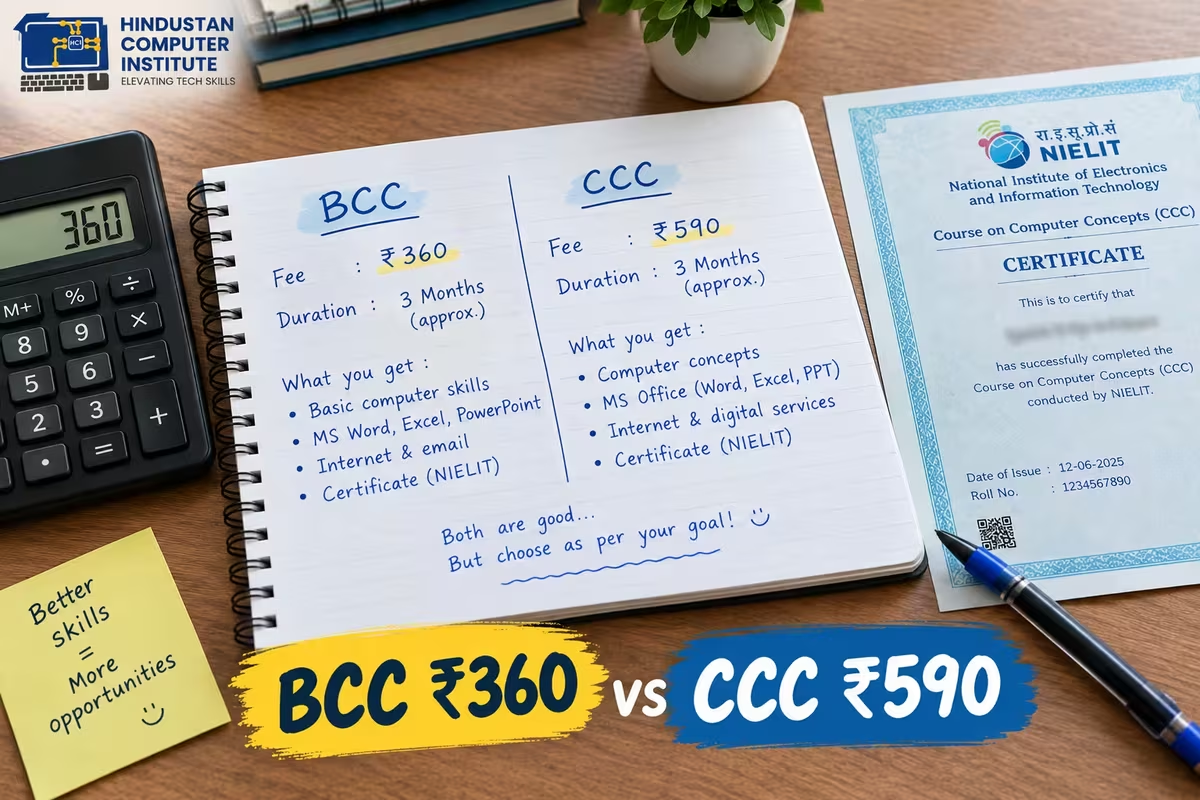
BCC stands for Basic Computer Course, and it is NIELIT's entry-level certificate, sitting one rung below CCC. The exam fee is around ₹360 [uncertain — NIELIT revises this periodically; confirm on the portal]. The course is 36 hours, eligibility is Class 8 pass, and the syllabus covers computer basics, Windows, MS Word, MS Excel and internet and email.
That is all of it. BCC is a genuinely small qualification and the fee reflects it honestly enough.
BCC fees and duration compared with CCC
| Factor | BCC | CCC |
|---|---|---|
| NIELIT exam fee | ~₹360 | ₹590 (₹500 + 18% GST) |
| Course duration | 36 hours | 80 hours |
| Eligibility | Class 8 pass | No formal minimum |
| Modules covered | 5 | 10 |
| Includes PowerPoint | No | Yes |
| Includes digital payments and cyber safety | No | Yes |
| Graded certificate | No | Yes, S to F |
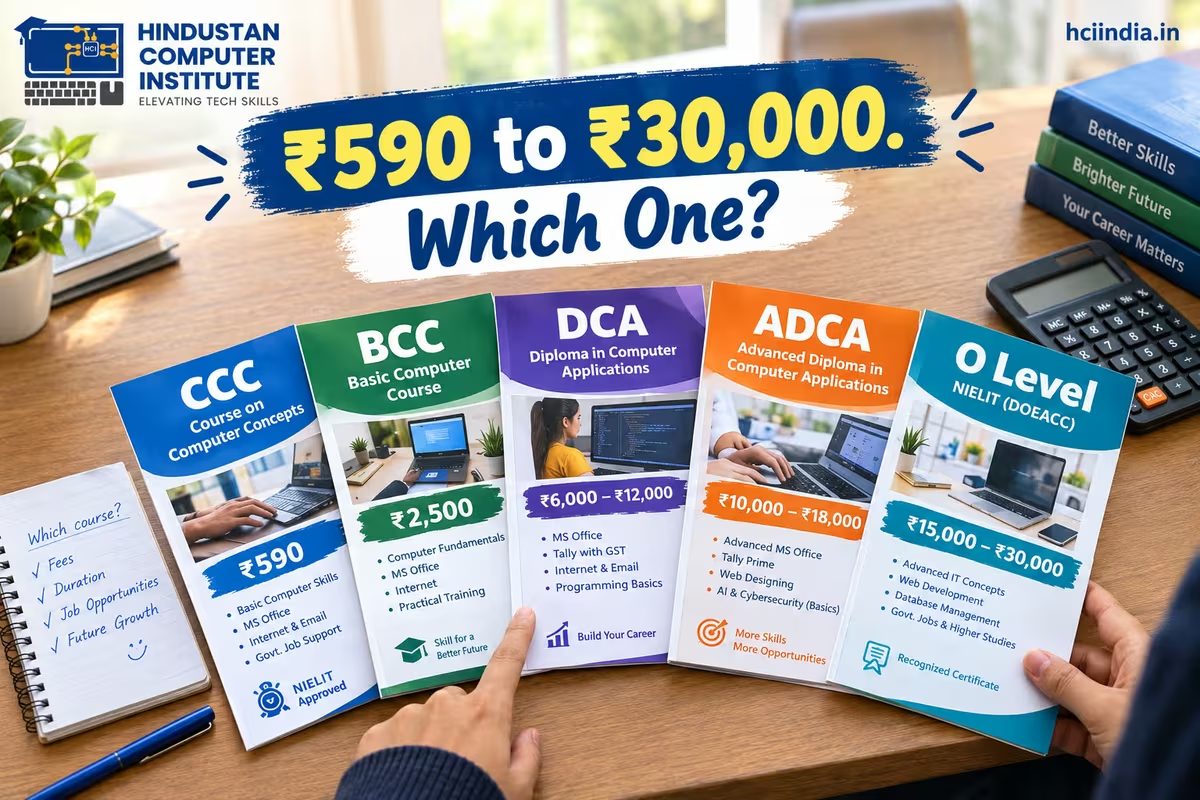
| Typical total with training | ₹2,860 – ₹4,360 | ₹2,590 – ₹8,590 |
| Named in government notifications | Rarely | Very often |
Read the last row twice. That is the row that decides this.
What BCC covers, and what it skips
The five BCC modules are introduction to computer, introduction to Windows, MS Word basics, MS Excel basics, and internet and email. Taught properly, 36 hours is enough to make someone functional on those five.
What it leaves out is where the problem starts. No presentation software. No digital financial services, so nothing on UPI, NEFT or online payments, which is the module our students in the villages around Billawar and Kathua consistently say changed the most for them. No cyber security or future skills. And no graded result, so your certificate says you passed and nothing else.
CCC covers all of it in 80 hours and hands you a grade you can put on a form. For roughly ₹230 more.
So is BCC worth doing?
For most students reading this, no. I would rather say that plainly than pad it.
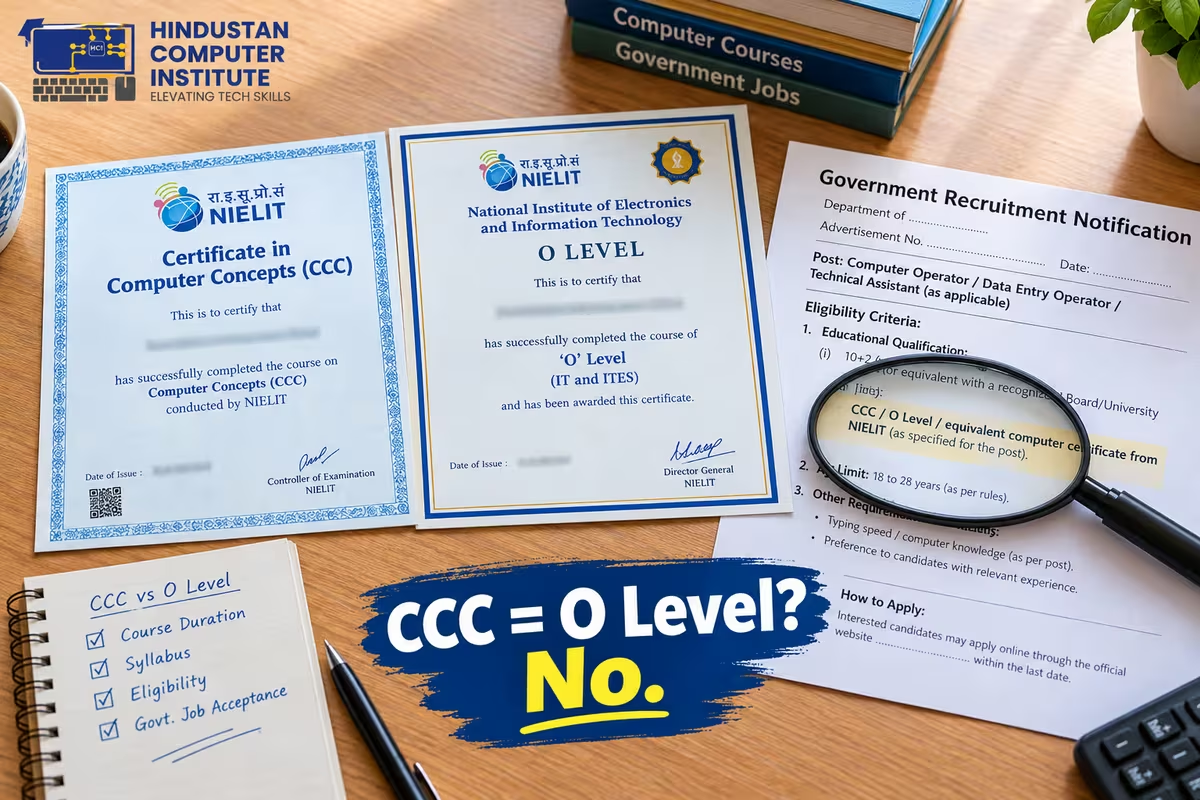
BCC makes sense in three situations. If you did not clear Class 10 and need a certificate that accepts Class 8 eligibility, BCC is your entry point and CCC's open eligibility may still not help you at the interview stage. If a specific local or rural recruitment drive names BCC, do BCC, because the notification is the rule. And if you are genuinely nervous about computers and want a short, cheap, low-stakes first certificate before committing to anything longer, BCC does that job without embarrassment.
Outside those three, the ₹230 gap buys you double the course, four times the credibility in recruitment notifications, and a graded certificate. In our batches we redirect most BCC enquiries to CCC within the first conversation, and almost nobody regrets it. If you want the full feature-by-feature breakdown, our post on NIELIT BCC vs CCC differences and job value goes deeper than the table above.
What BCC gets you in the job market
Honestly, not much on its own. BCC appears occasionally in Group D and peon-level recruitment and in some remote and rural drives, where the requirement is proof of basic literacy rather than a skill test. Those are real postings and BCC is real eligibility for them.
What BCC does not do is satisfy the computer requirement in the clerical, patwari, revenue and computer operator notifications where CCC is named, and those are the postings most students are actually chasing. Entry-level data entry and office assistant work in J&K advertises around ₹8,000 to ₹15,000 a month [uncertain — depends on typing speed and whether the post is contractual], and the employers hiring for it ask for CCC or a diploma, not BCC.
If your goal is employment rather than a certificate, the money is better spent on typing speed and spreadsheet skill than on the cheaper exam.
The one case where BCC is clearly the right call
A student came to us last year who had left school after Class 8 and had never used a computer. He wanted to work in his family's shop and handle the billing himself. CCC would have been a stretch and O Level was irrelevant to him.
BCC was correct for him for reasons that had nothing to do with recruitment. It was short enough to finish while working, cheap enough that failing would not have been a disaster, and it covered exactly the five things he needed. He passed, and then came back four months later for CCC because by then he wanted it.
That sequence, BCC as a confidence step rather than a destination, is the version of this course that works. Treating BCC as a cheaper substitute for CCC is the version that wastes ₹3,000.
How HCI handles BCC and CCC students
We teach both, and we route students between them at the enquiry stage rather than after they have paid. That conversation takes ten minutes and saves an entire course fee often enough to be worth doing properly. For what it is worth as a credential check: we hold ISO 9001:2015 certification, we are registered with MSME and the Ministry of Corporate Affairs, and a little over 2,500 students have come through Billawar.
Our practical sessions run on the same LibreOffice suite the NIELIT exams test, which matters for CCC in particular, and students outside J&K can join the online batches.
Conclusion
BCC is cheap, short and limited, and those three facts are the same fact. If you cleared Class 10 and you are aiming at government clerical or operator work, skip it and put the ₹360 towards CCC instead. If Class 8 is your qualification, or a notification names BCC specifically, or you want a low-stakes first step before a bigger course, then BCC does exactly what it says. Bring us the notification or just your situation, either at our Billawar centre or through a free counselling session, and we will point you at whichever of the two is genuinely yours.