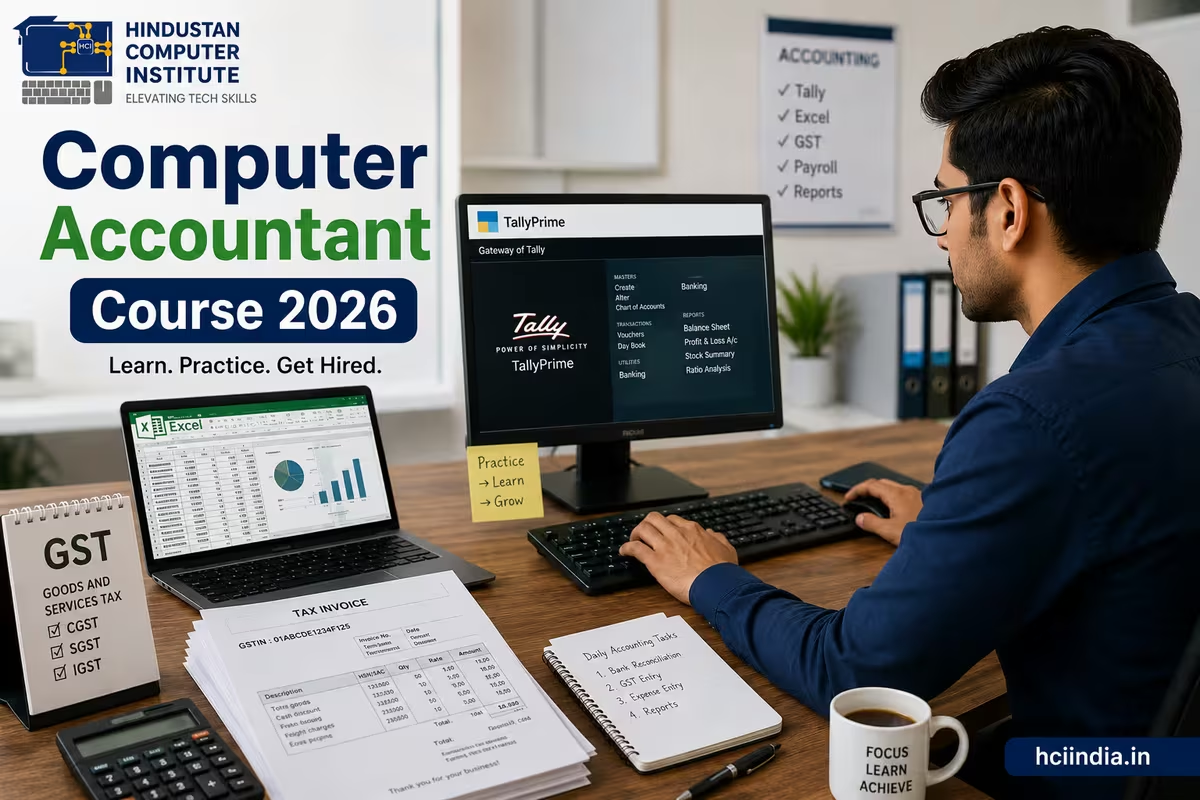
A computer accountant course teaches you to manage business accounts on a computer using tools like Tally Prime, GST, and Excel, instead of paper ledgers. In 2026 it's one of the most job-ready courses for commerce students, because almost every Indian business needs someone who can handle billing, GST, and books digitally. Fees and salary vary, but demand is steady year-round.
What is a Computer Accountant Course? (Quick Answer)
A computer accountant course trains you to do accounting work using software rather than manual registers. You learn to record transactions, generate invoices, file GST, manage payroll, and produce reports in tools like Tally Prime and MS Excel. It suits commerce students, graduates, and job seekers who want practical, employable skills. The goal is simple: make you able to run a small business's day-to-day accounts on your own.
Computer Accountant Course: Syllabus, Fees & Salary
| Aspect | What to Expect | Notes |
|---|---|---|
| Core tools | Tally Prime, GST, MS Excel, Marg ERP | Sometimes TDS and e-invoicing too |
| Duration | 3–12 months | Depends on depth (short course vs diploma) |
| Fees (India range) | ₹8,000–₹30,000 | Varies by city and course length |
| Eligibility | 10+2, ideally commerce | Non-commerce students can join too |
| Fresher salary | ₹12,000–₹20,000/month | Grows with GST and Excel skills |
What You Learn in a Computer Accountant Course
A good computer accountant course keeps theory light and practice heavy. You start with accounting basics - debit, credit, ledgers - then apply them straight away in Tally Prime, which is where concepts finally click for most students. From there you move into GST: creating tax invoices, filing returns, and handling input credit. You'll also cover bank reconciliation, TDS basics, payroll, and building reports in Excel that a business owner can actually read. In our accounting batches, we teach these as one connected workflow, because that's how a real job works - you rarely use just one tool. Our ADFA program covers this full stack, from Tally and Marg ERP through GST, TDS, and e-invoicing.
Career Scope and Salary After the Course
The demand side is what makes this course worth it. Trained computer accountants work in shops, trading firms, CA offices, manufacturing units, schools, and NGOs - basically anywhere money moves. Common roles include accounts executive, GST assistant, billing executive, and junior accountant. Freshers often start around ₹12,000–₹20,000 per month, and pay climbs steadily as you take on real GST filings and clean monthly books. Here's the honest part: the certificate gets you noticed, but speed and accuracy get you paid. An accountant who closes books on time without errors becomes hard to replace, and in smaller cities across J&K, local firms especially value someone who can start work immediately.
Where to Learn: Why Hindustan Computer Institute?
Hindustan Computer Institute is a Tally Authorized Training Partner and ISO 9001:2015 certified, so you learn accounting software the way businesses actually use it. Trainer Mamta Vaid focuses on Tally Prime, GST, and payroll with real practice sets, and we're aligned with Marg ERP for billing-heavy roles. Students get lab time, placement support, and both offline and online batches across J&K. With 2,500+ students trained, our aim is to make you employable as a computer accountant from day one.
Conclusion
A computer accountant course is one of the safest skill bets for commerce students in 2026, because the demand is broad, steady, and local. Learn Tally, GST, and Excel together, get real practice, and you qualify for accountant roles rather than plain data entry. Ready to start? Call or visit your nearest HCI center, or book a free counselling session to plan your accounting career.