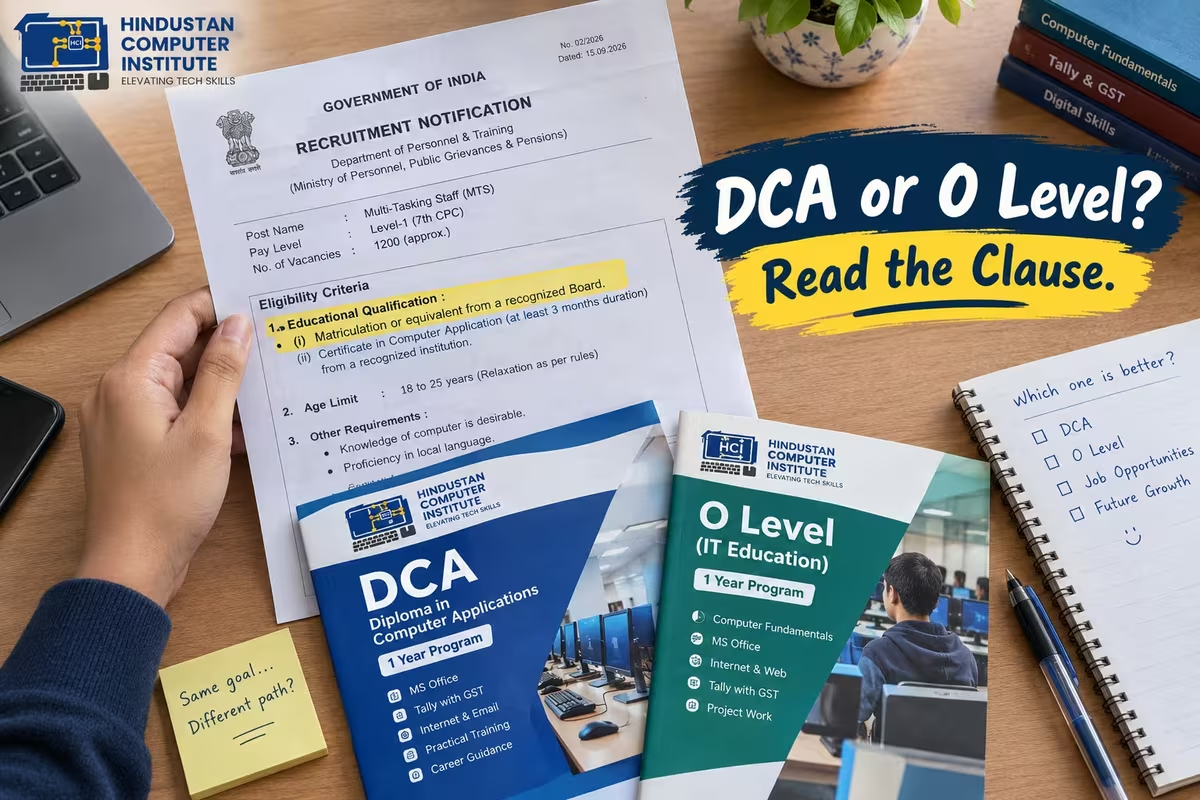
For government jobs, O Level is generally the stronger qualification. It is issued by NIELIT, a body under the Ministry of Electronics and Information Technology, and it is named directly in recruitment notifications. DCA is issued by a training institute or an affiliated university, and whether a department accepts it depends entirely on how the eligibility clause is worded.
DCA vs O Level: which is better for government jobs? (Quick Answer)
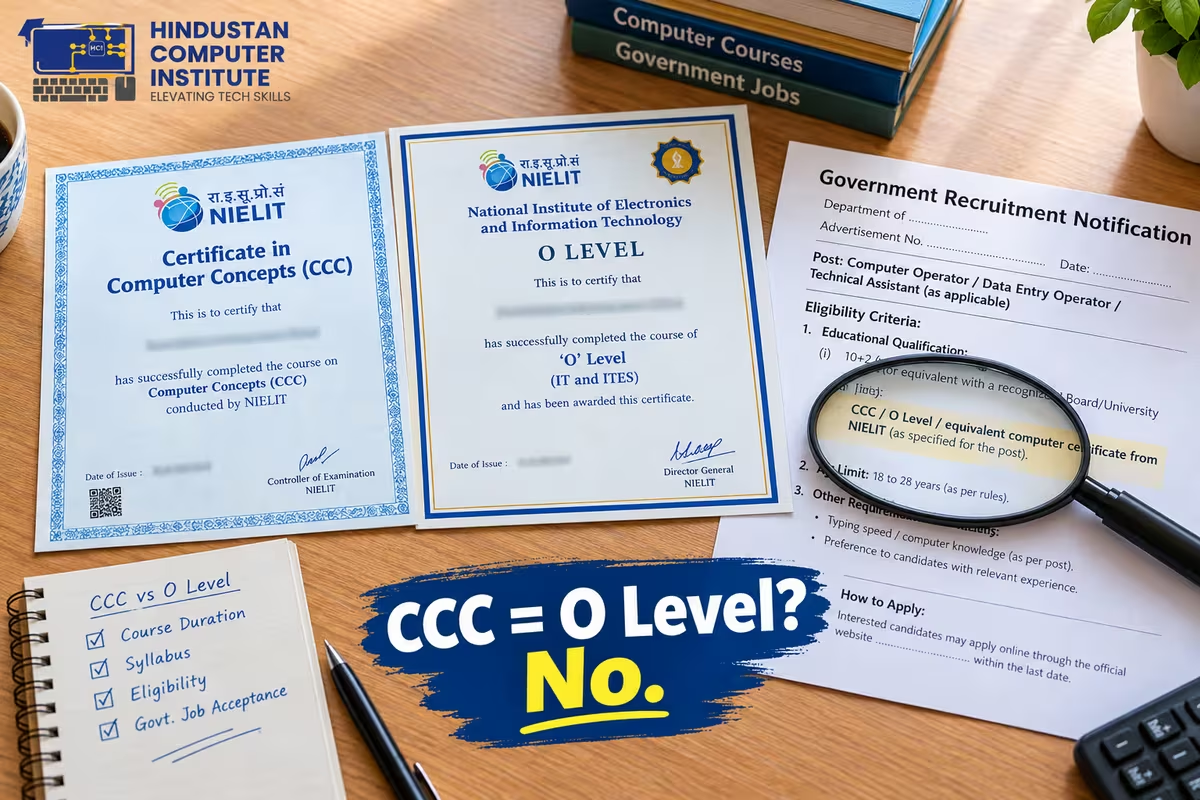
If the notification names O Level, only O Level will do. If it names a "diploma in computer applications from a recognised institution", a university-issued DCA usually qualifies and an institute-issued one may not. If it names CCC, neither of these is what you need and you should stop reading and go do CCC.
The decision is made by a sentence in a document, not by which course teaches more.
The full comparison
| Factor | DCA | O Level |
|---|---|---|
| Issued by | Training institute or affiliated university | NIELIT, Government of India |
| Duration | 6 to 12 months | 12 months, 540 hours |
| Eligibility | Usually Class 10 or 12 | 10+2 or ITI certificate |
| Typical cost | ₹8,000 – ₹15,000 | ₹4,600 – ₹5,000 direct with NIELIT |
| Programming content | Usually none, or very basic | Python, plus web design and IoT |
| Named in govt notifications | Only as a generic diploma | By name, frequently |
| Treated as diploma-equivalent | Depends on the issuing body | Yes, by several departments |
| Exam schedule | Institute's own, flexible | Fixed January and July cycles |
| Registration validity | Not applicable | 5 years from registration |
Notice that O Level is the cheaper of the two if you register direct. Students routinely assume the government qualification costs more. It does not; it just takes longer and offers no hand-holding.
Why "who issued it" decides everything
A DCA from a state university's distance education wing and a DCA from a two-room coaching centre carry the same three letters and completely different weight. The recruiting department is not evaluating your syllabus. It is checking whether the issuing body appears on a list.
This is the single most expensive misunderstanding we encounter in counselling. A student spends ₹12,000 and a year on an institute-issued DCA, applies for a post asking for a diploma from a recognised institution, and finds out at document verification that their institute does not qualify. There is no appeal for that and no refund.
O Level removes the ambiguity entirely. NIELIT is the issuing body, NIELIT is a government institution, and no verification officer has ever had to think about it twice.
When DCA is actually the better choice
Three situations, and they are real ones.
If you cannot clear a Python paper, DCA is a qualification you will finish and O Level is one you may not. M3-R5 defeats a meaningful number of O Level candidates every cycle, and an unfinished O Level is worth less than a completed DCA.
If you are targeting private-sector office work rather than government posts, the certificate name barely matters and speed does. A six-month DCA that gets you into a job six months earlier beats a twelve-month O Level that teaches you IoT you will never use in a billing role.
If your DCA comes from a recognised university and the notification wording is generic, you are covered anyway, and university diplomas often carry additional academic value if you later pursue further study.
What each one actually teaches you
O Level under the R5 syllabus is four papers: IT Tools and Network Basics, Web Design and Publishing, Programming and Problem Solving through Python, and Internet of Things and its Applications. Plus a practical and a project. It is a genuine foundation IT course and it expects you to write code.
DCA syllabi vary because nobody standardises them, but the common shape is computer fundamentals, MS Office in depth, internet and email, and often a basic accounting or Tally module. It is an office-skills course, and taught well it produces someone employable in an office quite quickly.
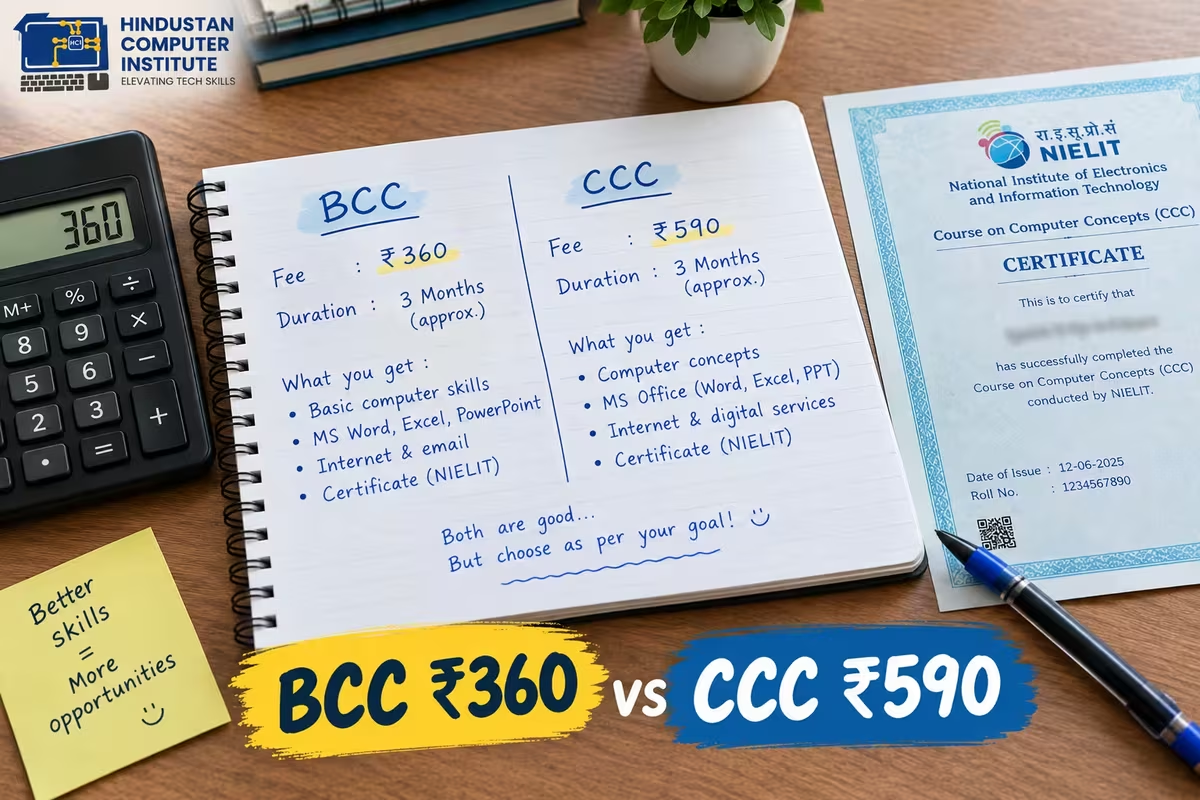
Neither is a lesser course. They are aimed at different jobs. The problem only arises when students pick one for a job the other was designed for. If you are weighing private diplomas more broadly, our comparison of computer course fees across CCC, BCC, DCA, ADCA and O Level lays the costs side by side.
Doing both, and whether it is worth it
Some students ask about doing DCA first and O Level after. It is not a bad sequence if you have the time, because DCA's office-skills grounding makes M1-R5 straightforward and leaves you room to concentrate on Python.
It is a poor sequence if money is tight, because you are paying twice for overlapping content. In that case pick the one your target notifications name, finish it properly, and add a specific second skill afterwards rather than a second general diploma. A student with O Level and solid Tally is more employable than a student with O Level and DCA.
How we advise students choosing between these two
We teach an institute-issued diploma ourselves, so read the next paragraph knowing we have an incentive. When a student's target notifications name O Level, we say so and help them register with NIELIT directly, which earns us nothing at all. Our own credentials, since they are relevant to the DCA half of this question: ISO 9001:2015 certified, MSME and Ministry of Corporate Affairs registered, 2,500+ students trained from Billawar, with online batches running across India.
Where our 12-month advanced diploma genuinely wins is for students heading into private-sector office and accounts roles, where advanced Excel and AI tools matter more than a government certificate name.
Conclusion
Pull up two or three notifications for the posts you actually want and read the eligibility clause in each. If O Level is named, do O Level and register direct to keep it under ₹5,000. If the wording is generic, check whether your prospective DCA's issuing body is recognised before you pay anything. And if you cannot write a simple program and cannot see yourself learning to, be realistic about O Level's Python paper before committing a year. Bring the notifications to our Billawar centre or to a free counselling session and we will read the clauses with you.