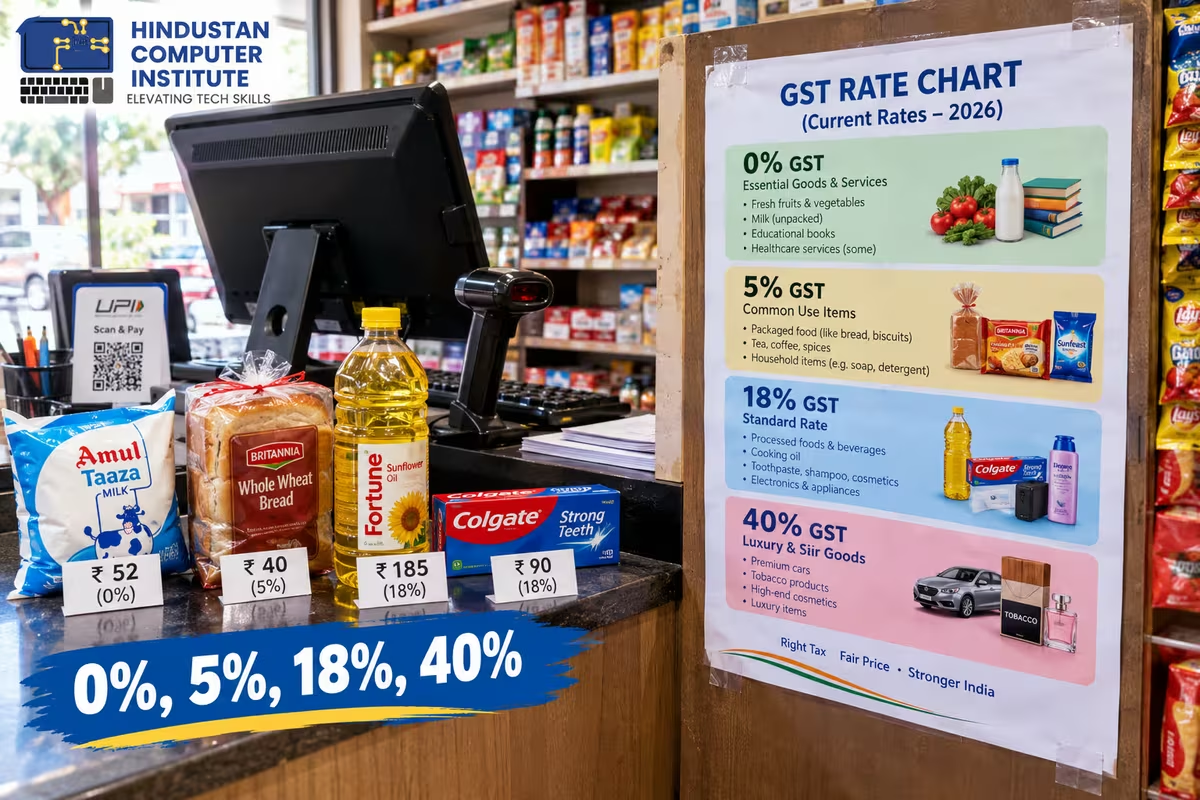
GST in India now runs on four main slabs: 0%, 5%, 18% and 40%, following the reform that took effect on 22 September 2025. The earlier 12% and 28% slabs were removed, with most 12% items moving down to 5% and most 28% items moving to 18%, while luxury and sin goods moved up to 40%. Two special rates remain for precious metals.
What are the GST slabs in 2026? (Quick Answer)
Four slabs carry almost everything: nil, 5%, 18% and 40%. Gold, silver and diamonds sit outside this on special rates of 3% and 0.25%.
If you are studying from material printed before late 2025, or from a website that has not been updated, you will see a five-slab structure with 12% and 28% in it. That structure no longer applies, and writing it in an exam or using it in a bill is now simply wrong.
Current GST slab list 2026
| Slab | What it covers | Examples |
|---|---|---|
| 0% (Nil) | Essential food, health and education items | Fresh vegetables, milk, eggs, unprocessed tea, specified lifesaving drugs, exercise books, pencils, maps |
| 0.25% | Rough diamonds and precious stones | Rough diamonds |
| 3% | Precious metals | Gold, silver, jewellery |
| 5% | Daily essentials, agriculture, healthcare | Hair oil, shampoo, toothpaste, butter, ghee, tractors, diagnostic kits, spectacles, processed foods, mineral water, footwear under ₹2,500 |
| 18% | Processed goods, electronics, manufactured items | Small cars up to 1200cc, motorcycles up to 350cc, air conditioners, televisions, cement, hand tools, furniture, machinery parts |
| 40% | Luxury and sin goods | High-sugar beverages, motorcycles above 350cc, luxury vehicles, yachts, aircraft, betting and gambling, revolvers and pistols |
Rates are as applicable following the 22 September 2025 revision [uncertain - the GST Council revises rates periodically and item-level classification is detailed; always confirm the HSN-wise rate on the official GST portal before billing].
What actually changed in September 2025
The reform collapsed five slabs into four, and the movement went in three directions.
Most items that were at 12% came down to 5%. This is the change customers noticed, because it covered a lot of ordinary household goods and processed foods.
Most items that were at 28% came down to 18%. Air conditioners, televisions, small cars and motorcycles all fell into this group, which is why vehicle and appliance prices moved after the change.
A smaller set of items went up rather than down, into the new 40% band. Sin goods, luxury vehicles, aerated and high-sugar drinks, and gambling. The 40% rate is higher than the old 28% ceiling, so these items became more expensive rather than cheaper.
For anyone doing accounts, the practical consequence is that any rate master, price list or Tally configuration created before September 2025 needs checking. We spent a fair amount of last autumn helping local shops correct rate masters that were quietly still billing at 12%.
How the slabs split into CGST, SGST and IGST
The slab is the total rate. How it splits depends on where the buyer and seller are.
For a sale within the same state, the rate splits equally into CGST and SGST. An 18% intra-state sale is 9% CGST plus 9% SGST. A 5% intra-state sale is 2.5% plus 2.5%.
For a sale between states, the full rate goes to IGST. An 18% inter-state sale is 18% IGST with no split.
This trips up students constantly in Tally, because the invoice total is identical either way and only the ledgers differ. Get the ledger wrong and the return will not match the books. The 50-entry practice set includes both intra-state and inter-state GST transactions for exactly this reason.
Worked examples you can check yourself
A shop in Jammu sells furniture worth ₹50,000 to a customer in Jammu. Furniture is at 18%, and the sale is intra-state. CGST ₹4,500, SGST ₹4,500, invoice total ₹59,000.
The same shop sells the same furniture to a customer in Punjab. Now it is inter-state. IGST ₹9,000, invoice total ₹59,000. Same money, different ledgers.
A kirana store sells hair oil worth ₹1,000 within the state. Hair oil is at 5%. CGST ₹25, SGST ₹25, total ₹1,050.
A dealer sells a motorcycle of 500cc worth ₹3,00,000. Above 350cc, so 40%. GST ₹1,20,000, total ₹4,20,000. The size of that number is the whole point of the sin-goods band.
Fresh vegetables sold by the same kirana store: nil rate. No GST, but the sale still appears in the return as an exempt supply, which students routinely forget.
Why the old slabs still appear everywhere
Search this topic and you will find pages listing 12% and 28% as current. Some are old articles that were never updated. Some are newer articles that copied the old ones. Textbooks printed before 2026 carry the old structure too.
If you are preparing for an exam, use the rate structure applicable on your exam date and say so if the question is ambiguous. If you are working in accounts, use the current structure and check the portal for anything item-specific, because classification at HSN level is more detailed than any slab summary including this one.
And if your Tally company was configured before the change, open your GST rate setup and look at it. A rate master that still contains 12% will keep producing invoices at 12% indefinitely, because software does what it was told.
What this means if you are learning accounts
Two practical implications for students.
Learning slab numbers by rote is now clearly a poor use of time, because they have changed once and can change again. What does not change is the mechanism: how CGST, SGST and IGST work, how input credit offsets output liability, and how the return reflects the books. Learn the mechanism and any future slab revision becomes a lookup rather than a relearning.
Second, the ability to update a rate master and correct historic entries is a genuinely marketable skill right now, precisely because the change was recent and a lot of small businesses have not fully cleaned up. That is real work available to someone at the start of their career. Our accounting diploma covering Tally Prime, GST and e-invoicing teaches the mechanism first and the current rates second, in that order deliberately.
GST teaching at HCI
We updated our GST module within weeks of the September 2025 change, which sounds like a small thing and was not, because every practice set, every rate example and every worksheet had to be redone. Teaching an outdated slab to a student who then uses it at work is a real harm, not a curriculum inconvenience.
Tally Authorized Training Partner, Marg ERP registered, ISO 9001:2015 certified, MSME and Ministry of Corporate Affairs registered. 2,500+ students trained from Billawar, online batches available.
Conclusion
Four slabs: 0%, 5%, 18% and 40%, plus 3% and 0.25% for precious metals. If you are reading a different list somewhere, check its date. Verify item-level rates on the official portal rather than any summary, and if you maintain books, audit your rate master this week rather than discovering the problem at return time. Come to our Billawar centre if your Tally GST setup needs checking, or book a free counselling session to see where your GST knowledge currently stands.