The most common question students ask before enrolling in a computer diploma course is: what will I actually earn after this? It is a fair question, and most websites either avoid it or give numbers that have no connection to what freshers are actually being offered. This post gives you the honest 2026 salary picture - by course level, job role, and location - so you can make a real decision.
What Affects Salary After a Computer Diploma in India?
Your diploma level is one factor. But the salary you get after a computer diploma in India depends on four things together: the specific course you completed and what it covered, the job role and sector you join, the city or region where you work, and the skills you can demonstrate in an interview - not just on paper. A DCA graduate who can run VLOOKUP formulas and format professional reports will almost always earn more on day one than one who cannot, even with the same certificate.
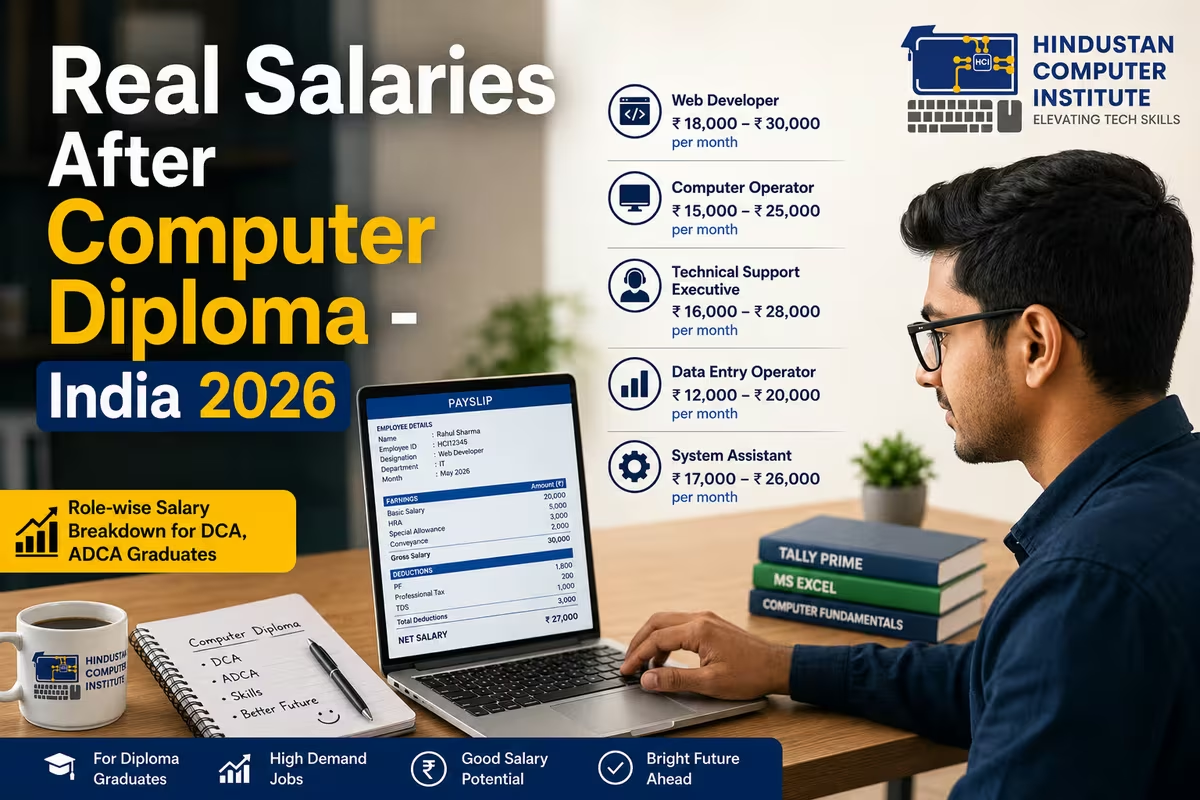
Salary After Computer Diploma - Role-wise Table 2026
| Job Role | Qualifying Diploma | Sector | Monthly Salary - Metro [uncertain] | Monthly Salary - Tier 2/3 City [uncertain] |
|---|---|---|---|---|
| Data Entry Operator | DCA / CCC | Private / Govt | ₹13,000–₹18,000 | ₹9,000–₹13,000 |
| Computer Operator (Govt) | DCA / ADCA | Government | ₹19,900–₹35,000 (pay scale) | ₹19,900–₹35,000 (pay scale) |
| Office Assistant / Clerk | DCA / ADCA | Private | ₹14,000–₹20,000 | ₹10,000–₹15,000 |
| Accounts Executive (Tally) | ADFA / ADCA with Tally | Private / CA firms | ₹18,000–₹28,000 | ₹14,000–₹22,000 |
| MIS Executive | ADCA / MDCAA | Private | ₹20,000–₹35,000 | ₹15,000–₹25,000 |
| BPO / Customer Support Executive | Any computer diploma | BPO / IT services | ₹15,000–₹22,000 | ₹10,000–₹16,000 |
| IT Support / Helpdesk | ADCA / O Level | IT companies | ₹18,000–₹28,000 | ₹13,000–₹20,000 |
| GST / Accounts Assistant | ADFA / MDCAA | Trading / Manufacturing | ₹18,000–₹30,000 | ₹14,000–₹22,000 |
| LDC (Lower Division Clerk) | CCC / DCA / ADCA | Central Govt (SSC CHSL) | ₹19,900+ (Level 2, + HRA + DA) | ₹19,900+ (Level 2, + HRA + DA) |
| Self-employed (Typing / DTP / CSC) | Any diploma + typing | Self-employed | Variable: ₹12,000–₹35,000+ | Variable: ₹8,000–₹25,000+ |
DCA vs ADCA vs ADFA - How Much More Do You Earn?
The salary gap between DCA and ADCA is real, and it shows up within the first six months of employment. Here is what the difference looks like in practice.
A DCA graduate going into data entry or basic office work typically starts at ₹9,000–₹14,000 [uncertain] per month in Tier 2 cities like Jammu, Ludhiana, or Amritsar. That is the market for entry-level computer literacy. The ceiling for that band - without adding skills - is around ₹16,000–₹18,000.
An ADCA graduate going into an MIS or office admin role with Advanced Excel and Tally Prime typically starts at ₹14,000–₹20,000 [uncertain] in the same cities. That is a ₹5,000–₹6,000 monthly gap from day one, which compounds significantly over years of employment. The skill modules that create this gap are Advanced Excel (specifically pivot tables, VLOOKUP, and data analysis functions) and Tally Prime - two areas that most DCA programmes do not cover but every ADCA programme should.
ADFA graduates who go into accounting roles start at ₹14,000–₹22,000 [uncertain] in Tier 2 cities, with strong demand from CA firms, trading companies, and manufacturing businesses that need GST-compliant bookkeeping. This route has the highest ceiling for someone without a degree because accounting expertise compounds with experience in a way that general computer skills do not.
Students who complete HCI's MDCAA programme - which combines IT and accounting in one 12-month course - are positioned at the top of the diploma graduate salary band because they qualify for both computer operator roles and accounts roles, depending on what the employer needs most.
Government vs Private Sector - Which Pays Better After a Diploma?
This is where students often get confused. Government jobs pay less on paper at the entry level - an LDC or computer operator post starts at ₹19,900 per month (Level 2 of the 7th Pay Commission matrix). A private sector accounts executive in a good Tier 1 company might start at ₹22,000–₹28,000.
But government roles include House Rent Allowance (typically 8–24% of basic pay depending on city), Dearness Allowance (revised every six months), and benefits like medical coverage, pension, and job security that private entry-level roles rarely offer. When these are added in, the effective monthly value of a central government computer post is often comparable to or higher than a private sector equivalent in the same city.
For students from J&K specifically, state government posts under JKSSB come with these same 7th Pay Commission benefits. Keeping a close eye on JKSSB computer operator and DEO notifications is genuinely worth the effort alongside your diploma training.
Want to know what salary you can realistically target?
HCI counsellors have placed 2,500+ students in roles across private companies and government departments. They can give you a realistic salary range for your specific profile and location - for free.
👉 Book a free counselling session - no commitment needed.
How to Earn More After a Computer Diploma - 3 Things That Matter
Your diploma gets you into the interview room. What gets you the better salary offer is usually one of three things.
First: demonstrable Advanced Excel skills. Employers at the ₹18,000–₹25,000 level routinely give candidates a 10-minute Excel test. If you can use VLOOKUP, build a pivot table, and apply basic conditional formatting without hesitation, you will be in the top 20% of applicants for most admin and MIS roles. This is not a high bar - most freshers fail it simply because their training never included Excel at this level. HCI's ADCA curriculum covers these functions specifically.
Second: Tally Prime knowledge. For accounting and finance roles, Tally is the practical skill test. Know how to create a company, enter vouchers, generate a trial balance, and do basic GST entry - and you are already ahead of half the candidates. HCI's ADFA programme covers this at a level that maps directly to what CA firms and trading businesses need.
Third: professional typing speed. This is underrated. Many entry-level roles - DEO, LDC, computer operator - include a typing test as part of the selection. 30 WPM English typing is the usual minimum. 40+ puts you in the top candidates. If you sit a government exam, typing is often the round where most candidates are eliminated. A few weeks of dedicated typing practice changes this outcome dramatically. HCI offers a dedicated professional typing programme for exactly this reason.
Conclusion
Salary after a computer diploma in India in 2026 ranges from ₹9,000 for basic data entry to ₹35,000+ for experienced MIS and accounting roles. The diploma is the starting point, but the skills you develop within it - Advanced Excel, Tally Prime, professional typing - are what determine where in that range you land. The extra six to twelve months it takes to complete ADCA or ADFA instead of a basic DCA returns significantly more income over the first three years of employment.
If you want an honest assessment of what you can earn based on your specific background and target role, book a free counselling session with HCI - our counsellors will give you a realistic picture and match you to the right course for your goals.
Author: Dinesh Sharma, Founder & CEO, Hindustan Computer Institute
Last Updated: May 2026